Tree Removal Installation & Replanting in Bend, OR
After a tree comes down: stump grinding, root removal, and replanting the right species for Bend's dry summers and volcanic soils. Learn how the work is done.
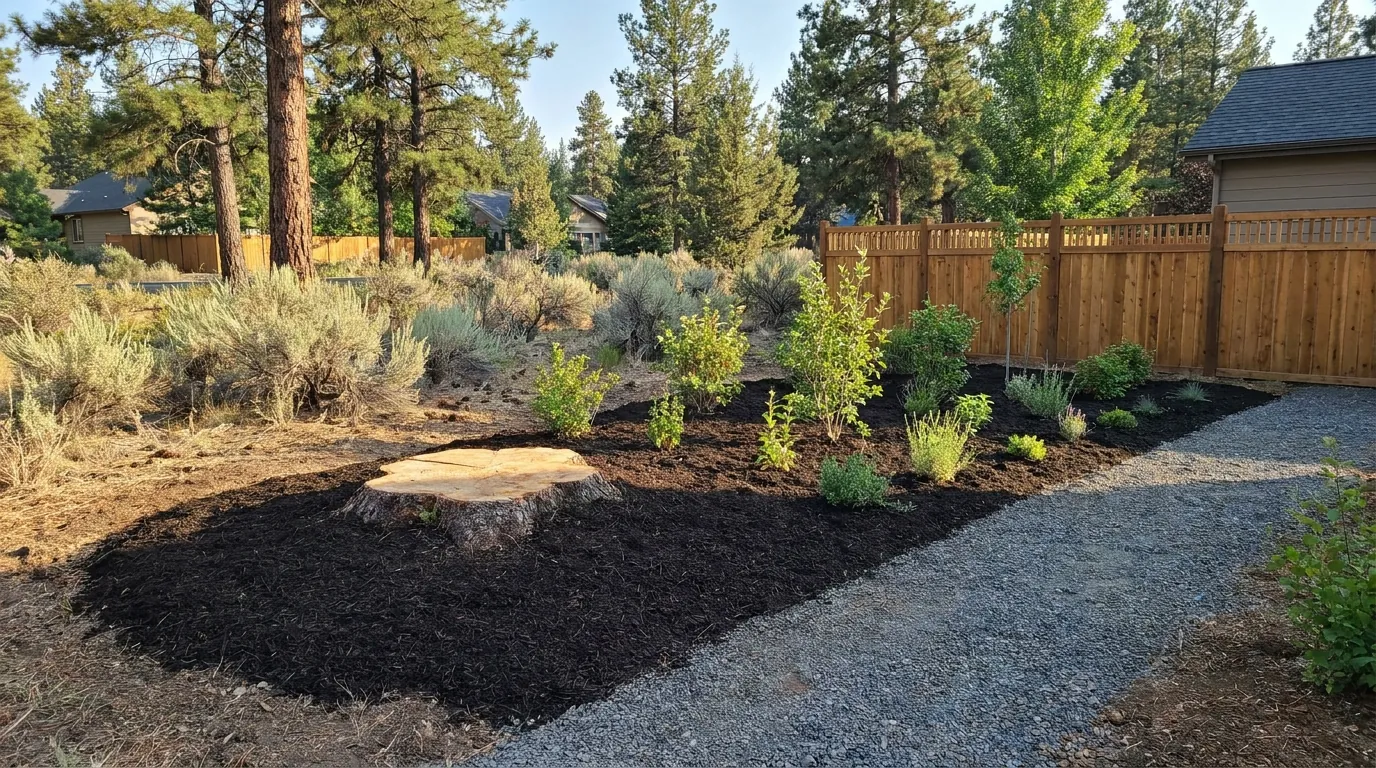
What happens after the tree is down
Removing a tree is only half the project. Tree removal installation is the work of putting the site back together — grinding or pulling the stump, dealing with the root system, restoring the soil, and, where a homeowner wants it, planting something new in the space. In Bend, this stage matters more than people expect, because our volcanic soils and dry summers make replanting a real decision rather than an afterthought. A stump left in place can regrow, harbor insects, and become a trip hazard, while a poorly chosen replacement tree can struggle for years in the wrong soil or the wrong exposure.
The first choice is what to do with the stump. Grinding takes it a few inches below grade so you can level the area, lay sod, or plant nearby; full extraction pulls the root ball when the stump sits where a foundation, patio, or driveway will go. On loose cinder soils common around Bend and out toward Crooked River Ranch, extraction leaves a large void that has to be backfilled and settled properly, which is part of the restoration work. Ground-out wood chips can be reused as mulch or hauled off, depending on your plans.
If you are replanting, species choice is where local conditions drive everything. Trees that thrive west of the Cascades often struggle in the High Desert's dry heat and cold nights, so we steer homeowners toward proven Central Oregon performers with the drought tolerance and root habits that suit volcanic ground. If the tree you removed was hazardous, revisit our tree removal service notes on siting so the replacement does not repeat the problem, and if you are recovering from storm damage rather than a full removal, our tree removal repair work may apply instead.
From stump to new planting
A typical site-restoration and replanting project moves through these stages.
-
Stump assessment
We check the stump's size, root spread, and how close it sits to structures, irrigation, and utilities before deciding between grinding and full extraction.
-
Grinding or extraction
The stump is ground below grade or pulled entirely. On cinder-heavy Bend soils, extraction voids are backfilled so the ground settles evenly rather than sinking later.
-
Soil restoration
Wood chips are cleared or turned in as mulch, and the planting area is amended as needed — Central Oregon's lean volcanic soils often need organic matter worked in before anything new will establish.
-
Species selection and planting
We plant with the site's sun, wind, and water in mind, favoring drought-tolerant trees suited to the High Desert rather than species that only do well on the wet side of the Cascades.
-
Establishment care
A new planting needs consistent water through its first dry Bend summer. We set you up with a watering plan so the tree survives the season that kills most poorly-started transplants.
Ready to reclaim the space?
Whether you want a clean, level yard or a new tree in the same spot, we will handle the stump, the soil, and the replanting the right way for Central Oregon.
Serving Bend, Redmond, Black Butte Ranch, and nearby Central Oregon communities.
Frequently asked questions
Do I have to grind the stump after a tree is removed?
No, but there are good reasons to. A stump can regrow, attract insects, and get in the way of mowing or new landscaping. If it sits out of the way and you do not mind it, leaving it is a valid choice — grinding is about reclaiming and leveling the space.
Can I plant a new tree where the old one stood?
Usually yes, once the stump is ground out and the area is restored. It helps to shift the new tree slightly off the old root mass and amend the soil, since Bend's volcanic ground is often lean and the leftover wood needs time to break down.
What trees do best in Bend's climate and soil?
Drought-tolerant, cold-hardy species that handle the High Desert's dry summers and cold nights do best. Trees that thrive in wetter climates west of the Cascades often struggle here, so we recommend based on your specific site's sun, wind, and water.
How much water does a newly planted tree need here?
More than most people expect through the first summer. Central Oregon's dry heat pulls moisture out of the ground fast, so a new planting needs deep, regular watering during its establishment season before it can be tapered off.