Tree Removal Service in Bend, OR
Tree removal service in Bend and the surrounding High Desert. Learn the warning signs, how removal works, and how local soil and weather change the job.
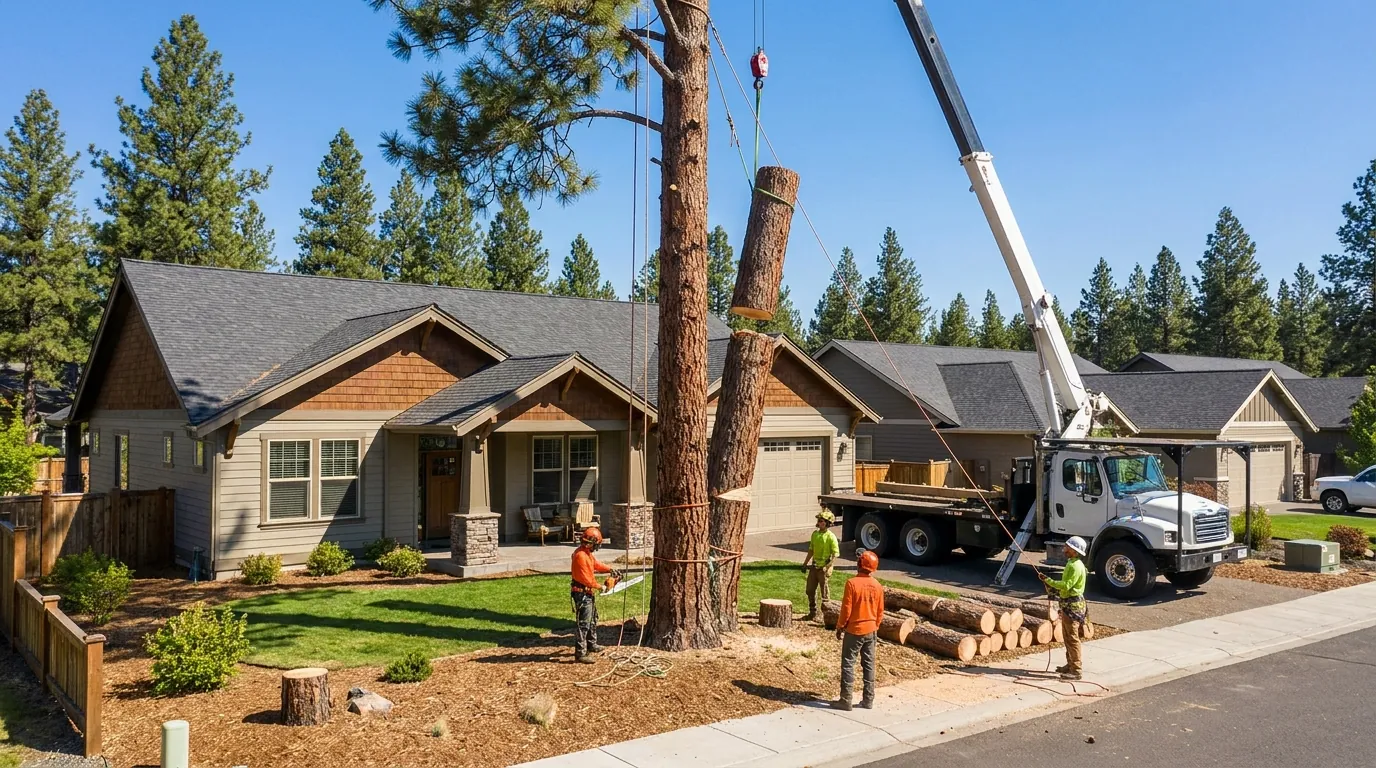
When a tree needs to come down
A tree removal service does more than cut down a trunk. In Bend, the trees people most often ask us to remove are mature ponderosa pines, junipers, and the occasional aspen or fruit tree that has outgrown its spot, died back, or started leaning toward a house, deck, or power line. On the High Desert side of the Cascades, our dry summers stress trees hard, and a pine that has been slowly declining for two seasons can become a real hazard by the third. Knowing when to remove — versus prune or wait — is the first decision, and it is often the hardest one for a homeowner to make alone.
If you are searching for a tree service near me because a tree looks unstable, the warning signs worth checking are consistent: a fresh lean that appeared after a windstorm, soil heaving or cracking on one side of the root plate, large dead limbs in the upper canopy, mushrooms or conks growing at the base, and bark that peels away to reveal soft or hollow wood. Bark beetle activity — pitch tubes and sawdust-like frass on ponderosa pines — is common around Bend and can mean a tree is already failing from the inside. Any of these on a tree tall enough to reach a structure is a reason to have it looked at before winter storms arrive.
Removal is the right call when a tree is dead, structurally unsound, growing into a foundation or septic line, or simply too large for its location. It is not always the answer — sometimes targeted pruning or cabling buys years — which is why we walk the site before quoting. For trees that are stressed but salvageable, see our tree removal repair options, and if you are clearing space to start over, our tree removal installation work covers stump grinding and replanting.
How a tree removal is done, step by step
Every removal is a little different, but a safe job on a Bend property follows the same core sequence.
-
Site assessment and plan
We look at the tree's lean, health, and the space around it — houses, fences, sheds, irrigation, and power lines. On tight Bend lots and the wooded parcels toward Three Rivers, the drop zone often decides whether a tree comes down whole or in sections.
-
Clearing and setup
The work area is cleared and, where needed, roped off. On volcanic-soil lots with loose cinder, we set ground protection so heavy equipment and falling wood do not tear up lawns and beds.
-
Sectional takedown or felling
Where there is room, a tree can be felled in one direction. Near structures, a climber or lift removes it in controlled sections, lowering limbs and logs by rope so nothing swings into what is below.
-
Limbing and processing
Branches are chipped and larger wood is cut to length. Many Bend homeowners keep the rounds for firewood — dry lodgepole and ponderosa season well in our climate.
-
Stump and cleanup
The stump is either left, ground below grade, or fully removed depending on your plans for the space. Debris is hauled off and the site raked down.
Not sure if it has to come down?
Send us a photo or ask for a walkthrough. We will tell you honestly whether removal, pruning, or waiting is the smarter move for your tree and your budget.
Serving Bend, Redmond, Sunriver, and the surrounding Central Oregon communities.
Frequently asked questions
How do I know if a tree needs to be removed or just trimmed?
If the trunk or major limbs are structurally compromised, the tree is dead, or roots are threatening a foundation or septic line, removal is usually the answer. Trees with a healthy trunk but overgrown or damaged branches can often be saved with pruning, so it is worth an on-site look before deciding.
Is it better to remove a tree in winter or summer around Bend?
Both work, but winter and early spring are often easier because deciduous trees are bare and the ground is firmer, reducing lawn damage. Dead or hazardous trees, however, should not wait for a season — those are best handled before the next round of High Desert wind.
Do you grind the stump too?
Stump grinding is a separate step we can include or skip. Many homeowners grind it if they plan to replant or reclaim the space, and leave it if the stump is out of the way and they are not concerned about regrowth or trip hazards.
Can you remove a tree that is close to my house or a power line?
Yes. Trees near structures are taken down in controlled sections rather than felled whole, using ropes to lower each piece. Trees touching or overhanging energized lines require coordination with the utility, which we will flag during the assessment.