Stump Grinding in Bend, OR
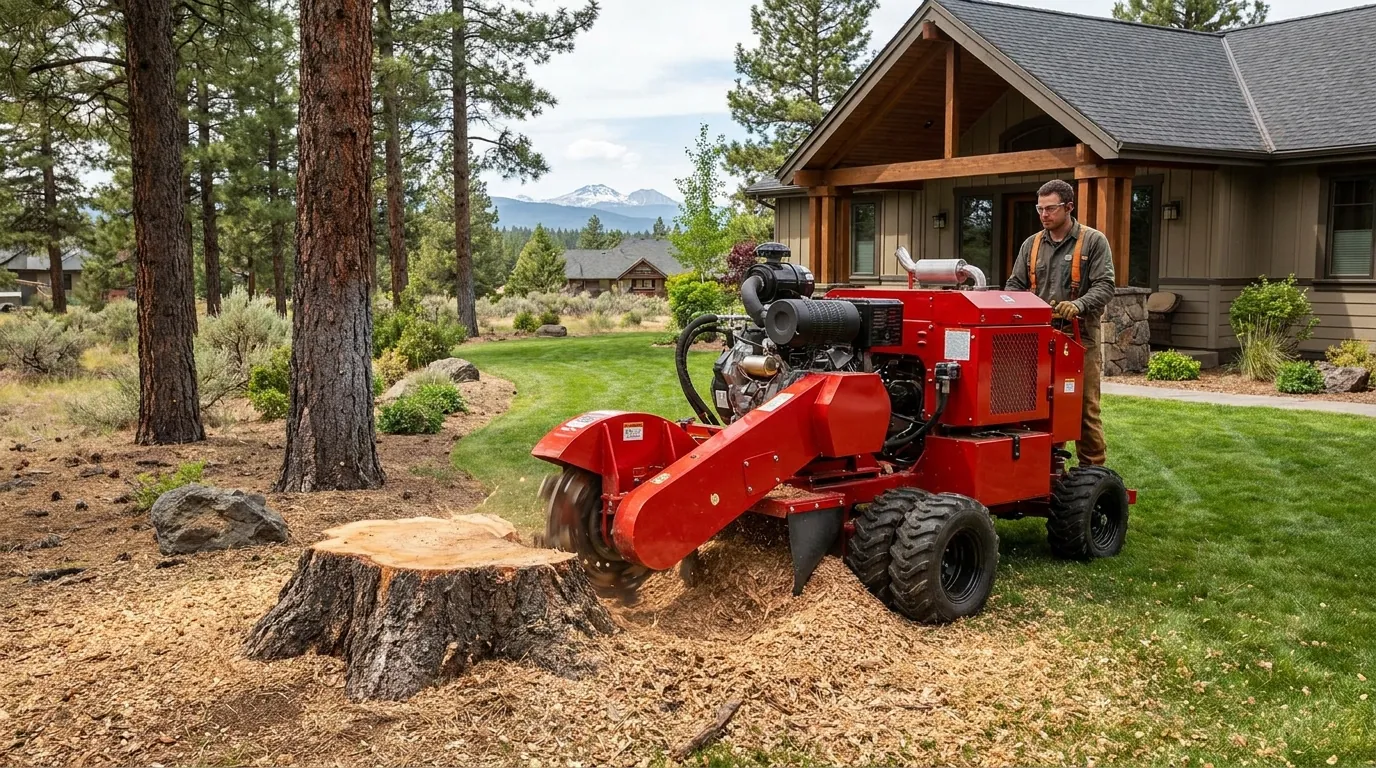
Stump grinding in Bend, OR. We grind stumps below grade so you can replant, re-level, or reclaim the space — with care for buried irrigation and volcanic rock.
Why deal with the stump
A leftover stump is more than an eyesore. It's a mowing obstacle, a tripping hazard, and a slow-rotting invitation to carpenter ants and fungus right next to your lawn or foundation. In Bend, pine stumps can sit for years in the dry climate without fully breaking down, and juniper stumps are famously stubborn. Grinding is the fastest way to be rid of one and get the ground back.
Stump grinding is the natural follow-on to tree removal — we can grind at the same visit or come back later for a stump someone else left behind. Either way, grinding takes the stump below ground level so you can replant grass, set a new tree, lay a patio, or just reclaim the footprint.
The one thing to understand up front: grinding removes the stump and surface roots in the grind zone, not every lateral root running out under the yard. Those stay in the soil and break down over time. For replanting or landscaping, the ground-out area is what matters, and we take it deep enough to work with.
How stump grinding works
The process is straightforward but depends on access and what is buried nearby.
-
Locate utilities
Before grinding we check for irrigation lines, cable, gas, and electrical in the work zone. Bend's many drip and sprinkler systems run shallow, so this step matters.
-
Clear the stump
Loose rocks and debris around the stump get removed — Central Oregon's volcanic soils often hide buried rock that can damage grinder teeth or throw debris.
-
Grind below grade
The grinder works the stump and surface roots down several inches below ground level, enough to replant or lay sod over.
-
Backfill and clean up
The grindings can be used to fill the hole or hauled away. We rake the area smooth so it is ready for soil and seed.
Local conditions that change the job
Central Oregon's volcanic soils are the main variable. Buried rock and cinder are common, and a grinder biting into unexpected stone slows the work and wears teeth. We expect it and plan for it, but it's a reason an on-site look beats a phone quote. Access is the other factor — a stump a machine can roll right up to is quick; one behind a fence or up a slope on an acreage lot near Crooked River Ranch takes more setup.
Depth is a choice. For lawn or garden, we grind deep enough for topsoil and roots. For a new tree in the same spot, we go deeper and clear more of the old root mass so the replacement has room. Tell us what you're planning and we'll grind to suit it.
Get a stump ground
Call with the stump's size and location and we'll schedule the grind — whether it's fresh from a removal or one that's been there for years.
Serving Bend and surrounding Central Oregon communities.
Frequently asked questions
How deep do you grind a stump?
Usually several inches below grade — enough for lawn, sod, or a garden bed. If you're replanting a tree in the same spot, we grind deeper and clear more of the root mass to give the new tree room.
Will grinding kill the surrounding roots?
Grinding removes the stump and the surface roots in the grind zone. Lateral roots running out under the yard stay in the soil and decay naturally over time; they rarely cause problems once the trunk is gone.
What do you do with the wood chips?
The grindings can backfill the hole, which is handy for leveling, or we can haul them off. If you plan to replant, we'll usually remove most of the chips and bring in clean soil instead.
Can you grind a stump a previous company left?
Yes. We grind older stumps all the time, including ones left behind after someone else did the removal. We'll check for buried irrigation and rock before starting, as those are common in Bend yards.