Tree Removal in Bend — Process, Cost Drivers & Scheduling
Safe tree removal in Bend, OR. How we take down hazardous, dead, or crowding trees, what drives the cost, and how to decide whether removal is the right call.
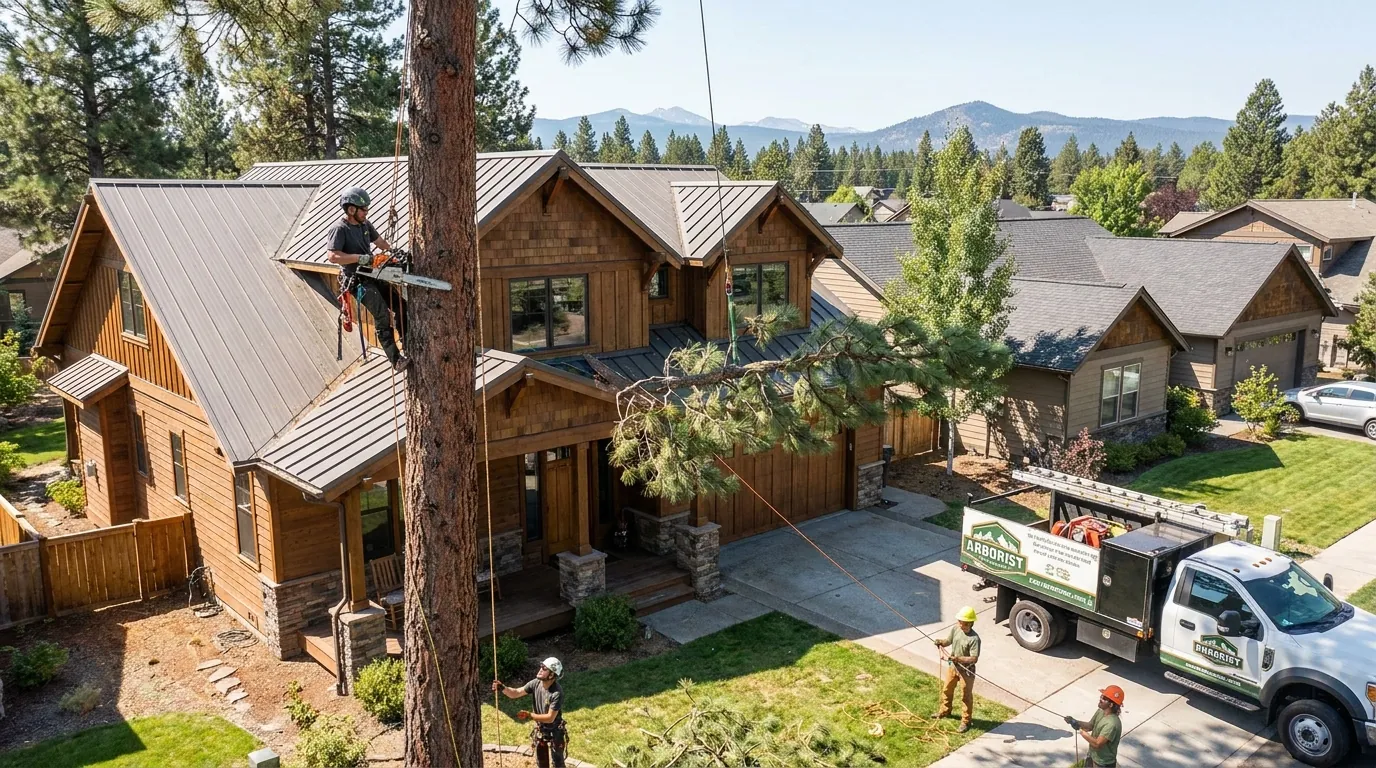
When removal is the right call
Not every struggling tree needs to come out, but some do — and in Bend the decision usually turns on where the tree sits, how it is loaded, and what would happen if it failed. A tall ponderosa leaning toward the house after a wet winter is a very different problem from a dead juniper out in an open corner of the lot. The first is a target; the second is a chore. Tree removal near me searches usually start the moment a homeowner notices the difference.
We handle residential and acreage removals across Bend and nearby communities, from single hazardous trees close to structures to clusters of dead or beetle-killed pines. If you are not sure whether a tree is actually dangerous, a tree health assessment is the cheaper first step — it often shows that trimming, not removal, solves the problem. When removal genuinely is the safer path, the sections below walk through how the work is done and what changes the price.
Central Oregon's conditions shape this work. Dry summers stress shallow-rooted pines, bark beetles move into weakened trees, and the wind events that roll through in winter and spring find the trees that are already compromised. A tree that looks fine in July can be the one that drops a limb in a December storm.
How a removal is done
Most residential removals in Bend follow the same sequence, scaled to the size and position of the tree.
-
Assess and plan
We walk the site, check lean, decay, and wind exposure, identify the drop zone or climbing plan, and flag anything nearby — sheds, propane tanks, irrigation, overhead lines — that changes the approach.
-
Clear the work area
Vehicles, furniture, and anything breakable gets moved out of the fall and rigging zones. On tight Bend lots this often means rigging limbs down in controlled pieces rather than felling in one drop.
-
Section down or fell
Where there is open space, the tree may be felled whole. Near structures, a climber or lift removes the canopy and trunk in roped sections, lowering each piece under control.
-
Process and haul
Brush is chipped, logs are cut to length, and debris is hauled out or left as firewood rounds if you want them. We rake and clear the area before leaving.
-
Deal with the stump
The stump stays unless you book stump grinding, which grinds it below grade so you can replant, re-level, or reclaim the space.
What drives the cost
No two removals price the same, but a few factors do most of the work. Size and species matter — a large ponderosa with dense wood takes longer and more rigging than a slender juniper. Position matters more: a tree with a clear drop zone comes down fast, while one wedged between a house and a fence has to be dismantled piece by piece, which is where most of the labor goes.
Access is the quiet cost driver. If a chipper and truck can pull right up to the tree, debris handling is quick. On acreage near Three Rivers or a fenced lot in town, carrying brush out by hand adds time. Dead and decayed trees can also cost more, not less — compromised wood is unpredictable, so it has to be taken down in smaller, more careful sections. We give a clear quote after seeing the tree; we don't price removals sight-unseen over the phone.
Get a tree looked at
Call to schedule a look at the tree you're worried about. We'll tell you honestly whether it needs to come down or whether trimming will do.
Serving Bend, Redmond, Sunriver, and surrounding Central Oregon communities.
Frequently asked questions
Do I always need to remove a tree that's partly dead?
Not necessarily. Many trees with some dead limbs can be saved with [tree trimming](/services/tree-trimming/) that removes the hazard while keeping the healthy structure. Removal is for trees that are structurally unsound, dead throughout, or positioned where failure would hit something important.
Will removing a tree damage my yard?
Good rigging and planning keep damage minimal. On tight lots we lower sections under control rather than dropping them, and we move breakable items out of the work zone first. Some ground impact from heavy rounds and foot traffic is normal but temporary.
What happens to the stump?
The stump stays in the ground unless you add [stump grinding](/services/stump-grinding/). Grinding takes it below grade so you can replant, lay sod, or re-level the area.
Can you remove beetle-killed pines on acreage?
Yes. Groups of dead or beetle-killed pines are common on Central Oregon parcels, and clearing them reduces fire fuel and falling-tree hazard. For larger thinning jobs we often pair removal with [lot and brush clearing](/services/lot-and-brush-clearing/).