Deadwood removal
Dead and dying limbs are the first thing to drop in a windstorm. Clearing them removes the most common falling-branch hazard over driveways and roofs.
Serving Bend, OR · (541) 576-8764
Tree trimming and pruning in Bend, OR. Deadwood removal, thinning, crown reduction and clearance cuts that reduce wind hazard and keep trees healthy.
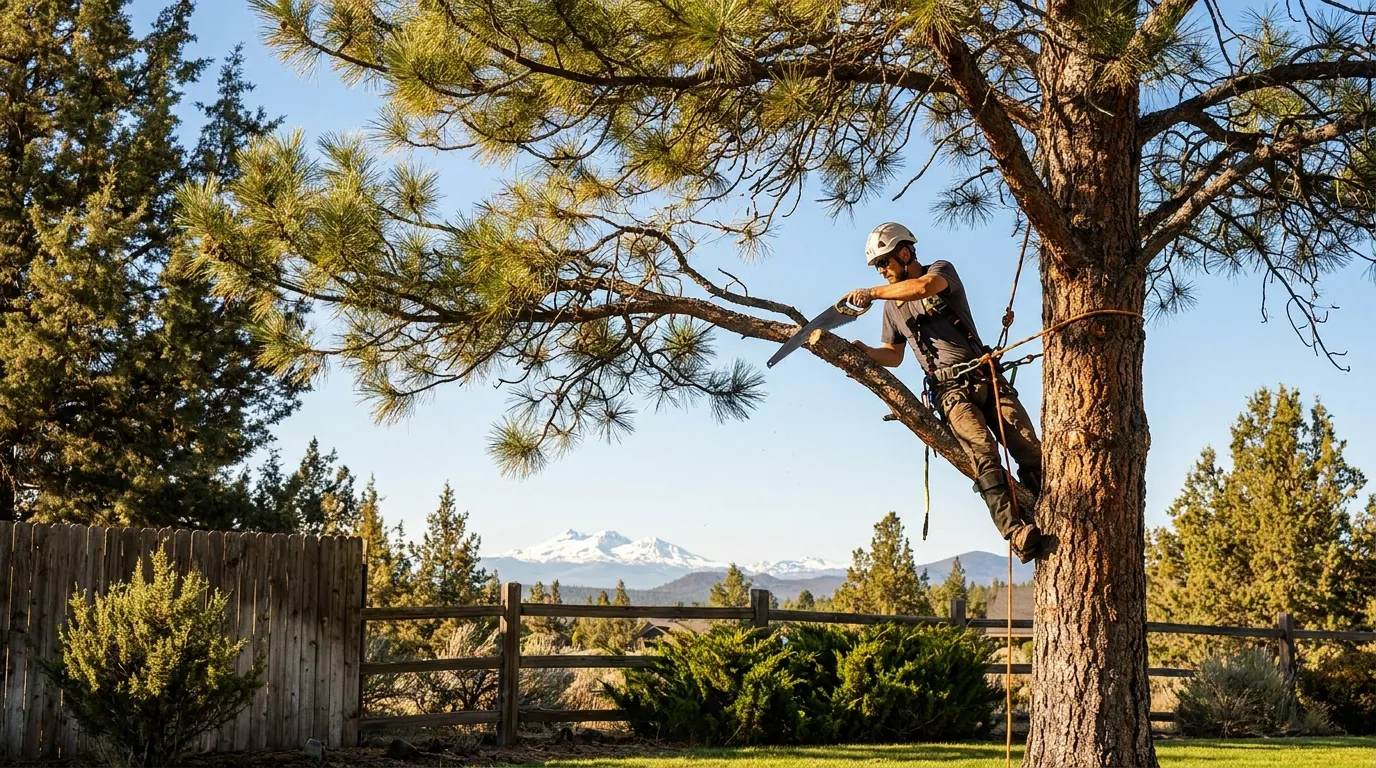
Good tree trimming is less about shaping and more about managing load and hazard. In Bend, the limbs that break in a windstorm are usually the dead ones, the overextended ones, and the ones growing against a roof. Removing the right branches at the right points lowers that risk and, done correctly, keeps the tree healthy for decades. Done badly — topping, over-lifting, random stubs — it creates weak regrowth and long-term decay.
Most tree trimming near me searches come from one of two situations: a tree that's grown into a structure or sightline, or a tree that dropped a limb and the owner wants the rest made safe. Both are routine for us. When a tree is too far gone to save with pruning, we'll say so, and a tree health assessment can settle the question before any cuts are made.
Species drives the approach. Ponderosa and lodgepole pines, junipers, and the deciduous trees homeowners plant around town all respond differently to pruning. We cut to the species and the goal, not a one-size template, and we respect how much live canopy a tree can lose in a single season without being stressed.
We tailor the cuts to the species and the goal, not a one-size template.
Dead and dying limbs are the first thing to drop in a windstorm. Clearing them removes the most common falling-branch hazard over driveways and roofs.
Selective removal of interior branches reduces wind load and lets light through — important for crowded pines on Bend's wooded lots.
Shortening overextended limbs back to healthy growth points lowers leverage on the trunk and keeps trees clear of structures.
Raising low limbs away from roofs, driveways, and sightlines without over-lifting the canopy and stressing the tree.
Bend's dry summers and wet winters give trimming a rhythm. Dormant-season pruning, done before spring growth, is easier on most trees and lets us see structure clearly without leaves in the way. We avoid heavy cuts during the hottest, driest stretch of summer when trees are already under drought stress, and we stay mindful of bark beetle season — fresh pine wounds and piles of fresh pine debris can attract beetles if timing and cleanup aren't managed.
If a limb is an active hazard — hanging, cracked, resting on a structure — timing takes a back seat to safety and it comes off now. For that kind of urgency, our emergency tree service covers storm damage and dangerous limbs. For everything else, we'll recommend the best window when we quote the job.
Call to have your trees looked at and get a plan for what should be pruned and when.
Serving Bend and nearby Central Oregon communities.
As a general rule, removing more than about a quarter of a tree's live canopy in one season stresses it. We prioritize the limbs that matter — dead, hazardous, or in conflict with structures — rather than cutting for volume's sake.
No. Topping leaves large wounds, triggers weak, fast regrowth, and often leads to decay and future failure. Where height is a real concern we use proper crown reduction back to healthy growth points instead.
Dormant season — late fall through late winter — suits most trees and makes structure easy to read. We avoid heavy cuts in the hottest, driest part of summer and manage timing around bark beetle pressure on pines.
If a tree is structurally unsound or dead throughout, pruning only delays the inevitable. In those cases we'll recommend [tree removal](/services/tree-removal/) and explain why, so you can decide with the full picture.