Trunk and union defects
Cracks, cavities, weak V-shaped forks, and fungal conks that signal internal decay or a likely failure point.
Serving Bend, OR · (541) 576-8764
Tree health assessment in Bend, OR. We check trunk, root, and canopy condition to tell you whether a tree is safe, treatable, or should come down.
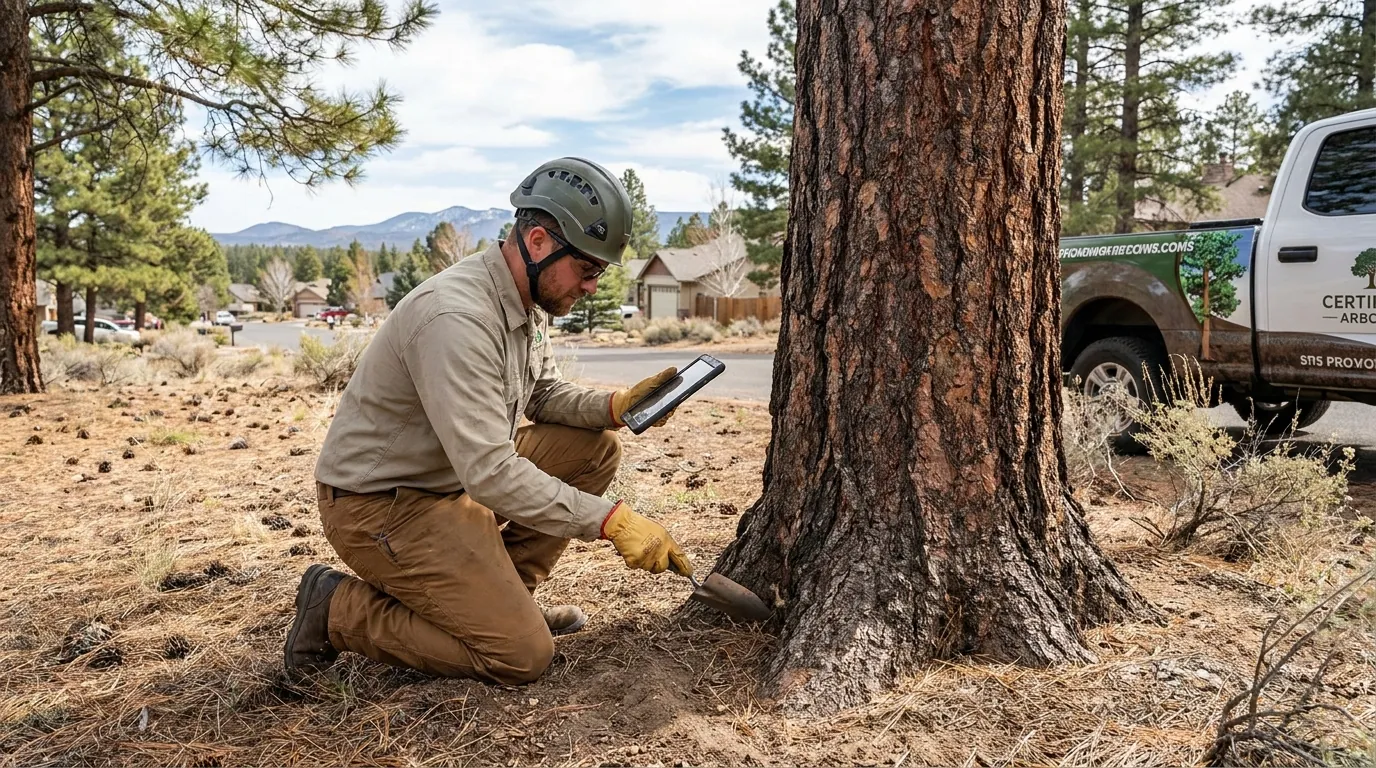
A tree health assessment answers the question most Bend homeowners are really asking: is this tree a problem, and if so, how urgent is it? It's the cheapest step in tree care and often the one that saves the most money, because it tells you whether a tree needs removal, needs pruning, or just needs watching. Spending on a removal a tree didn't need is a common and avoidable mistake.
We walk the tree and its setting, look at the trunk, the root base, and the canopy, and weigh what we find against where the tree stands — what would it hit if it failed. That last part, the target, is what turns a defect into a hazard. A hollow trunk in the middle of open acreage is a curiosity; the same defect leaning over a bedroom is a reason to act.
In Central Oregon, the usual culprits are drought stress, bark beetles, and root problems from shallow volcanic soils. A tree can look green from the street and still be failing at the base. The assessment is where those hidden issues come to light.
A walk-around assessment covers the tree and its setting.
Cracks, cavities, weak V-shaped forks, and fungal conks that signal internal decay or a likely failure point.
Heaving soil, exposed or cut roots, and rot at the root collar — often the real story behind a leaning or declining tree.
Dieback, thinning foliage, off-color needles, and beetle signs that point to drought stress or pest pressure on Bend's pines.
Wind exposure, irrigation, soil moisture, and what sits in the fall zone — all of which shape how urgent any problem really is.
At the end you get a plain-language read on each tree we look at: healthy, treatable, or a hazard. For treatable trees we'll recommend a pruning plan and the right timing — often this means scheduled tree trimming rather than anything drastic. For trees that are structurally unsound or dead throughout, we'll explain why tree removal is the safer call and roughly how urgent it is.
An assessment is also the smart first step before clearing a wooded lot, since it separates the trees worth keeping from the ones that should go. However the assessment comes out, you're left able to make the decision with real information instead of a guess.
Call to schedule a look at a tree you're unsure about. You'll get an honest read on whether it's safe, treatable, or a hazard.
Serving Bend and surrounding Central Oregon communities.
Warning signs include new leans, heaving soil at the base, large dead limbs, cracks in the trunk, and fungal conks. But the real risk depends on what's in the fall zone — an assessment weighs the defect against the target to tell you how urgent it is.
Often, yes. Many trees with some dead limbs or minor defects can be kept safe with [tree trimming](/services/tree-trimming/). Removal is for trees that are structurally unsound, dead throughout, or positioned where failure threatens something important.
The common drivers here are drought stress from dry summers, bark beetle pressure on weakened pines, and root problems in shallow volcanic soils. A tree can look fine from the street while failing at the base, which is why we inspect the root collar.
If you're certain, you can go straight to removal. But many homeowners book a removal a tree didn't need — an assessment confirms whether pruning would solve the problem for far less, so it's worth doing when there's any doubt.